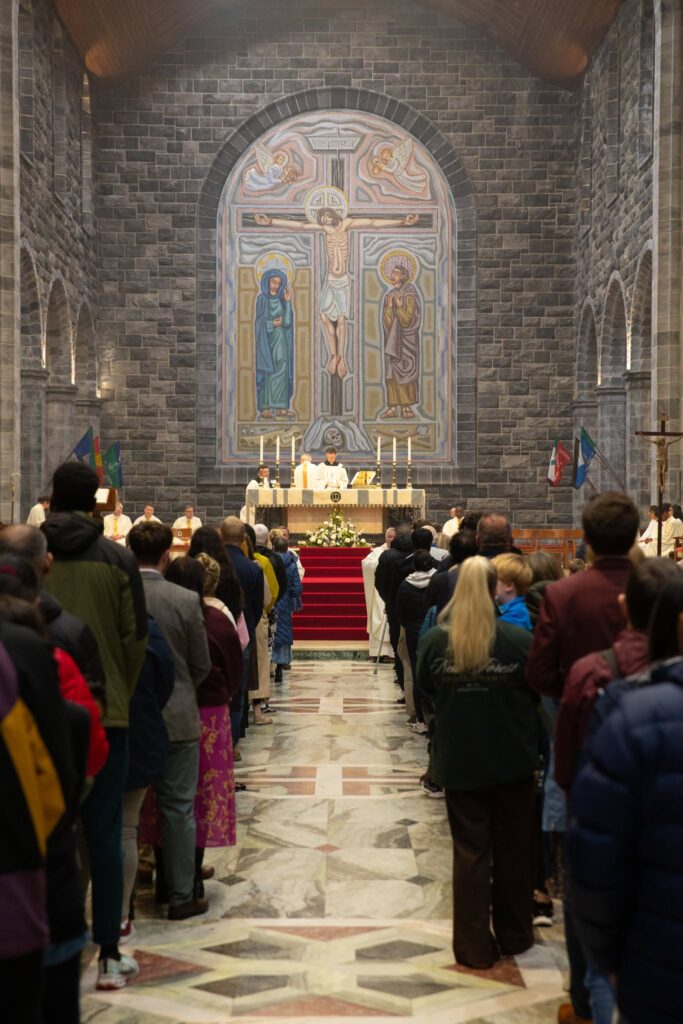
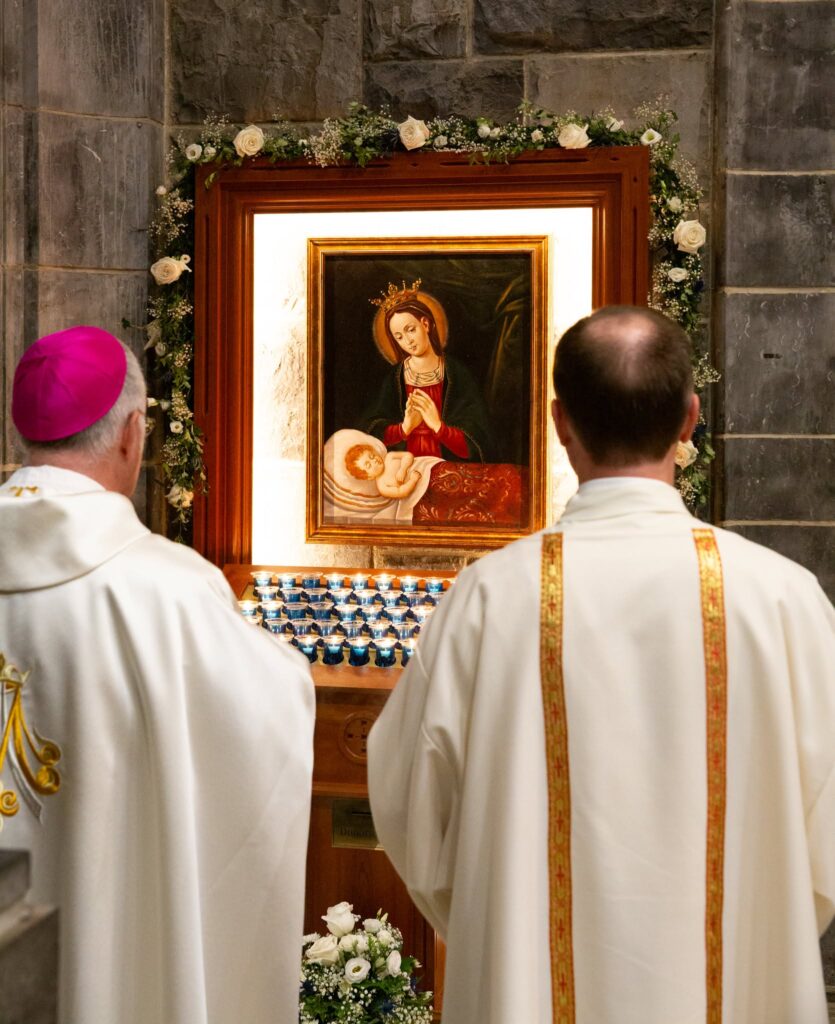
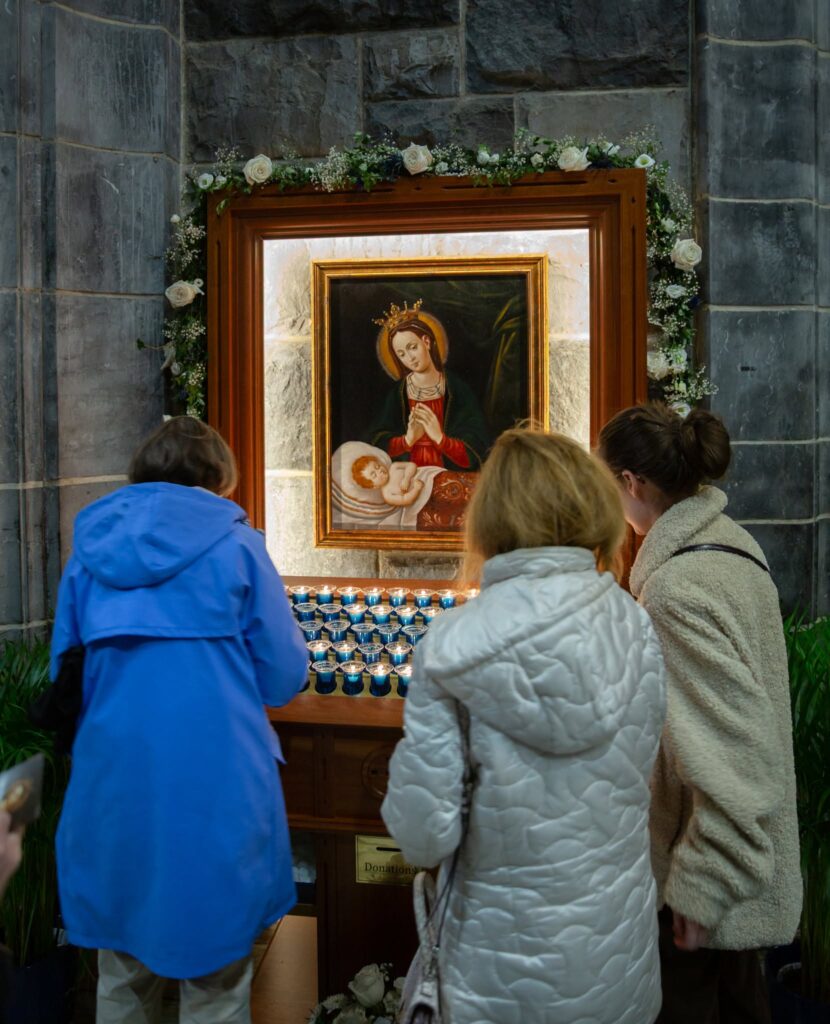
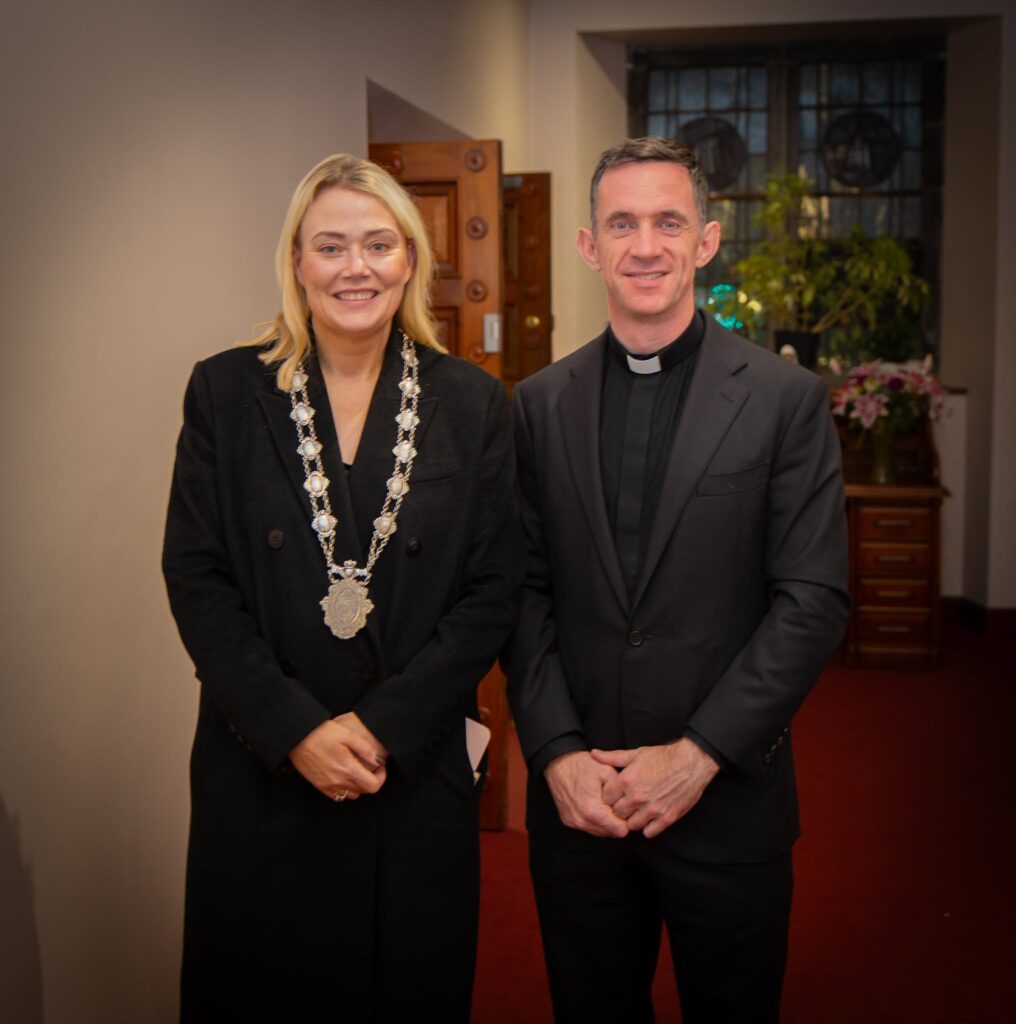
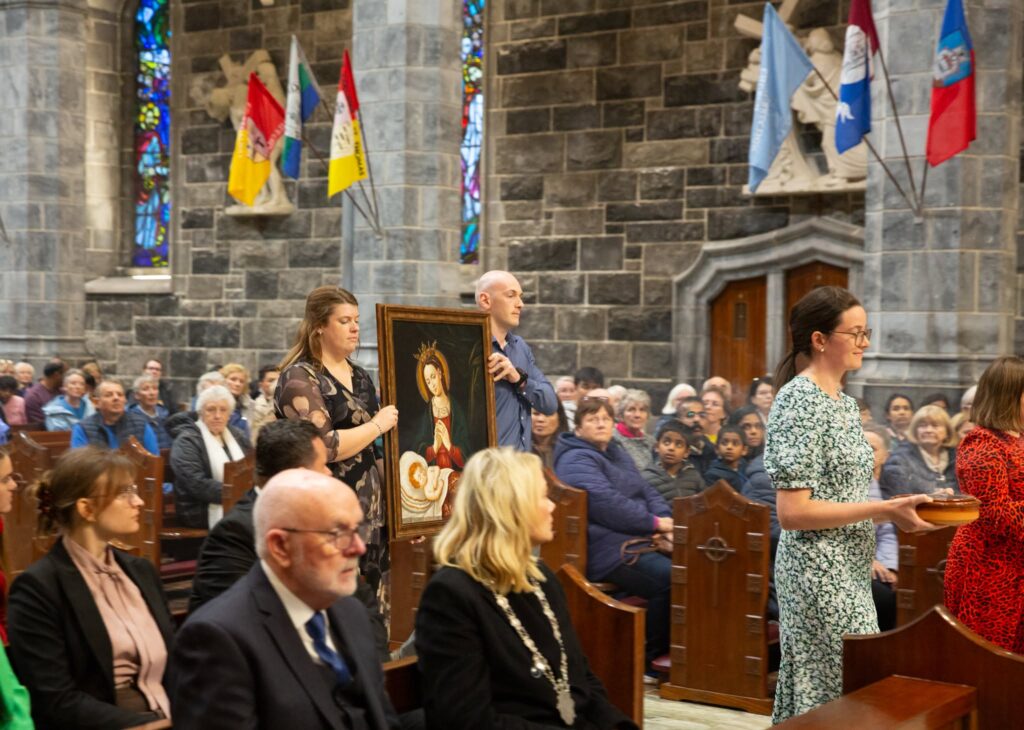
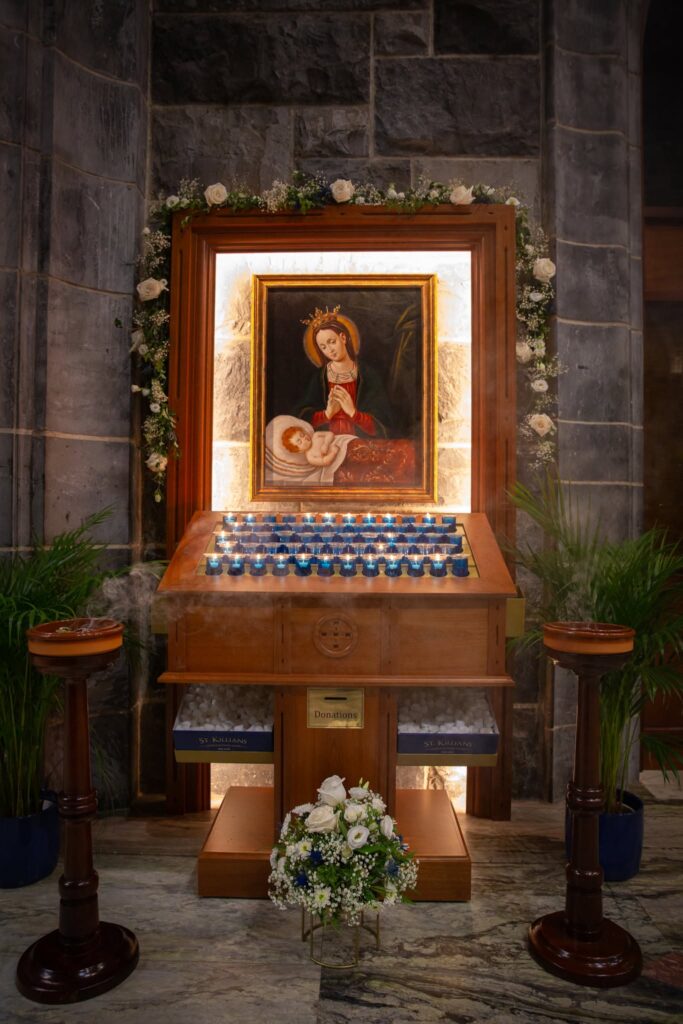
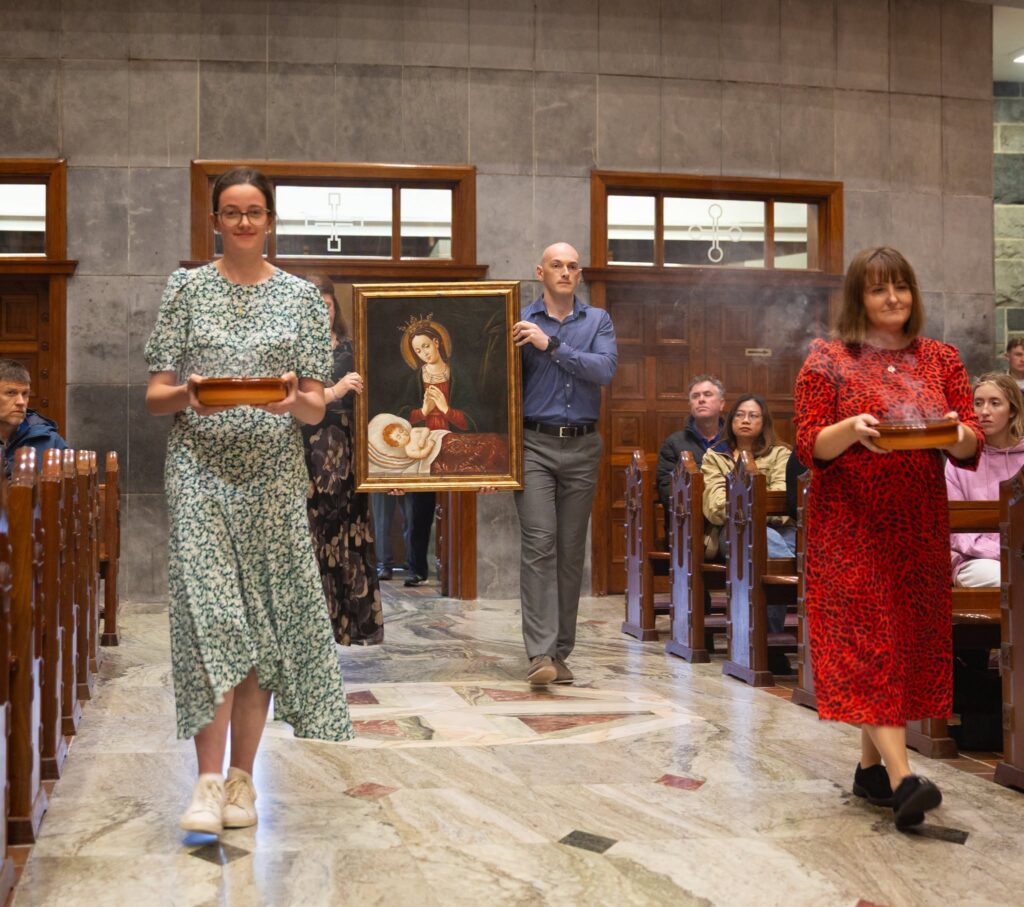
A new shrine to Our Lady Consoler of the Afflicted has been solemnly dedicated at Galway Cathedral by Bishop Michael Duignan.
The shrine houses a copy of the miraculous image of Our Lady associated with Walter Lynch (1595–1663), a Galway native and former Bishop of Clonfert, who brought the image with him when forced into exile in Hungary during the seventeenth century.
In his homily, Bishop Michael recalled the remarkable history of the image, which is associated with a miraculous event in the Hungarian city of Győr on St Patrick’s Day, 1697.
Reflecting on the many people who come to Galway Cathedral seeking comfort in times of difficulty, Bishop Michael expressed his hope that the new shrine would become a place of prayer and consolation.
“It is my prayer this evening that the institution of this new shrine to Our Lady Consoler of the Afflicted who miraculously stood with both Ireland and Hungary in their moments of affliction will be a source of consolation and hope for all who come before it in their need.”
Homily of Bishop Michael Duignan
Dedication of the Shrine to Our Lady Consoler of the Afflicted, Galway Cathedral
This evening we gather to solemnly dedicate a shrine to Our Lady Consoler of the Afflicted within the walls of our beautiful cathedral of Our Lady Assumed into Heaven and St Nicholas here in Galway. It is a significant moment for this Cathedral and indeed for our two Sister Dioceses of Galway and Clonfert. The image of Our Lady Consoler of the Afflicted that we will install this evening has deep roots in the history of Galway City and County. It has a close personal connection with the seventienth century Galwegian Walter Lynch (1595-1663). He was both a son of one of the great tribal families of Galway City and one of my predecessors as Bishop of Clonfert.
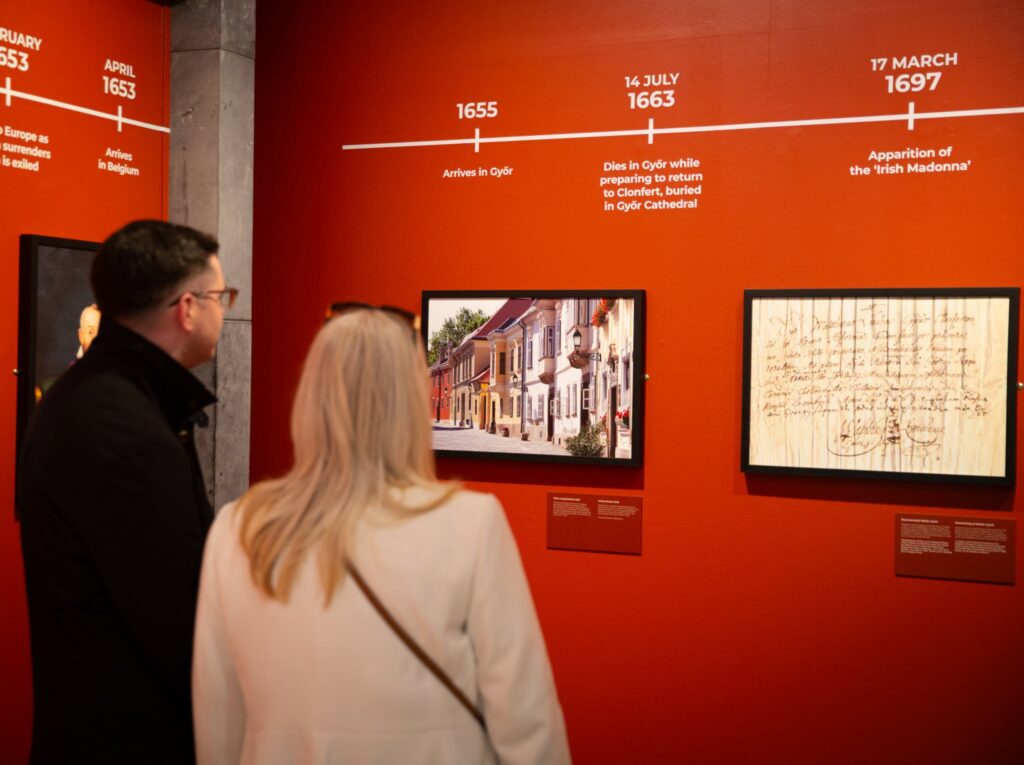
Walter was born into a wealthy Galway merchant family around 1595. Those days were tough. The Irish “Vineyard of the Lord” that we hear about in today’s readings was undergoing a sustained and systematic persecution. Education was forbidden to Catholics. Walter had to pursue further studies on the continent. He studied first in Lisbon and then theology in Paris. He was ordained a priest there. On his return to Ireland, he took up a leading ecclesiastical position as Warden of Galway and in 1647 was appointed Bishop of Confert. The increasing dominance of the English crown and the growing persecution and barbarism of Cromwell led Bishop Lynch and many more to flee Ireland. After risking life and limb he eventually ended up back on the Continent as refugee in Vienna. It was here in 1655, that he met Bishop János Püsky through whose kindness and generosity he was invited to the town of Győr halfway between the imperial cities of Vienna and Budapest. There he was given lodgings, became a Canon of the diocese and took a role in the ecclesiastical life of the city.
Walter died rather unexpectedly on the 14th of July 1663 as he was preparing to return to Ireland. He was buried at Győr Cathedral. After his death, one of his few personal belongings – his image of the Madonna and Child, which he was reputed to have taken with him from Ireland, was hung on the northern side of the Cathedral. It had blended in with the other religious art there unnoticed until the morning of the Feast of St Patrick – the 17th of March 1697. Witnesses to the event tell how while Mass was being celebrated the image of Mary miraculously wept with tears of blood for three whole hours. Investigated by Church authorities with a favourable outcome – the picture has, over time, become the focus for Marian devotion not just in the City of Győr but for all of Hungary and beyond. Later the timing of the miraculous event would be very much linked, on the Irish side, to the enactment of the most serious of anti-Catholic laws in Ireland in the days immediately beforehand. In Hungary, it would be seen as a sign of divine closeness after the afflictions of one hundred and fifty years of foreign oppression. In time, the painting became known as the “Weeping Virgin Mother of Győr” – the “Irish Madonna”, or my personal favourite, “Our Lady Consoler of the Afflicted”.
The painting that we enshrine this evening is a copy of Walter Lynch’s Miraculous Madona gifted to us some years ago by the current Bishop of Győr” Dr András Veres. Of all its titles it is Our Lady Consoler of the Afflicted that tugs at the strings of my heart. I see this picture, as Mary, she who knew Jesus better than any other human being, pointing us to the key Christian beliefs that, even though at times it is difficult to comprehend, God is always there for us when times are tough – there to listen to us, there to walk with us, there to console us, there to give us hope come what may and there to help us on the road of life. God is there to give us what St Paul refers to in the Second Reading this evening as a peace “which is so much greater than we can understand”.
I know that, day in day out, this great cathedral becomes a place of refuge from affliction for so many Galwegians and for those from outside the city. Day out, many tears are shed here. The worries of our world, the woes of our country, the concerns of our city are held in up to God here. This Cathedral is a place where the prayers of those whose relatives are sick and dying in our hospitals are whispered. A place where the anxiety of waiting for test results is brought before the lord. Here, parents come to quietly pray for children and children come to pray for parents. The loss of loved ones is mourned here. The mixed-up confused thoughts of youth in search of dreams are shared here. Human despair and hurts of so many varieties and hues are carried into this Cathedral to be left at the feet of the Lord. Hopes and dreams of what might be, of what could have been, and what sadly will never be, are shared with God here.
It is my prayer this evening that the institution of this new shrine to Our Lady Consoler of the Afflicted who miraculously stood with both Ireland and Hungary in their moments of affliction will be a source of consolation and hope for all who come before it in their need. For in this special image, we see Mary personify the closeness and compassion of God himself. In the silence of her miraculous tears, she calls out to us and to our entire world – no matter what never lose hope! – never yield to despair! – God is with you! – God is powerfully on your side!
A Mhuire Mháthair, i rith mo shaoil bí liom mar dhídean ar gach aon bhaol!
O Mother Mary, all through my life be my safe shelter in every strife! Amen