“The Tribes in Hungary exhibition we open tonight is much more than a historical display. It is a reminder that faith, culture, and humanity know no borders. It reminds us that the deep and important bonds of friendship, compassion, and artistic truth between Ireland and Hungary, between Galway and Hungary are ancient, resilient, and deeply alive today.” – Bishop Michael
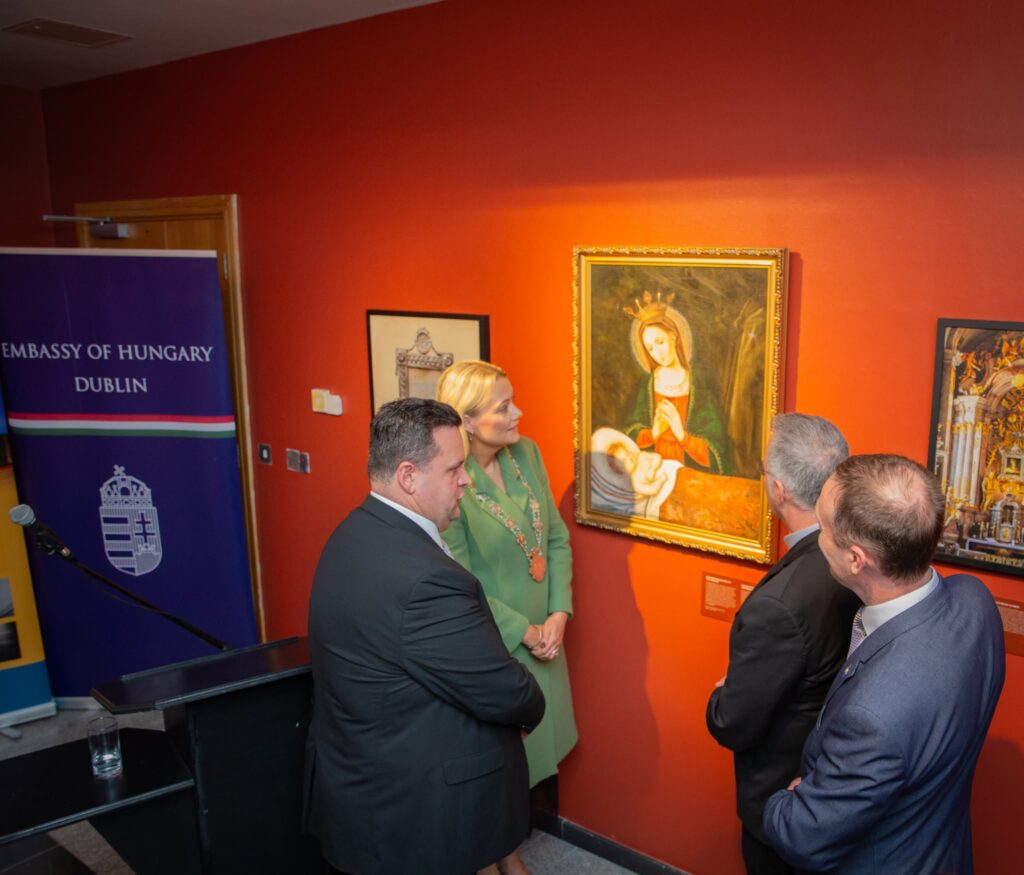
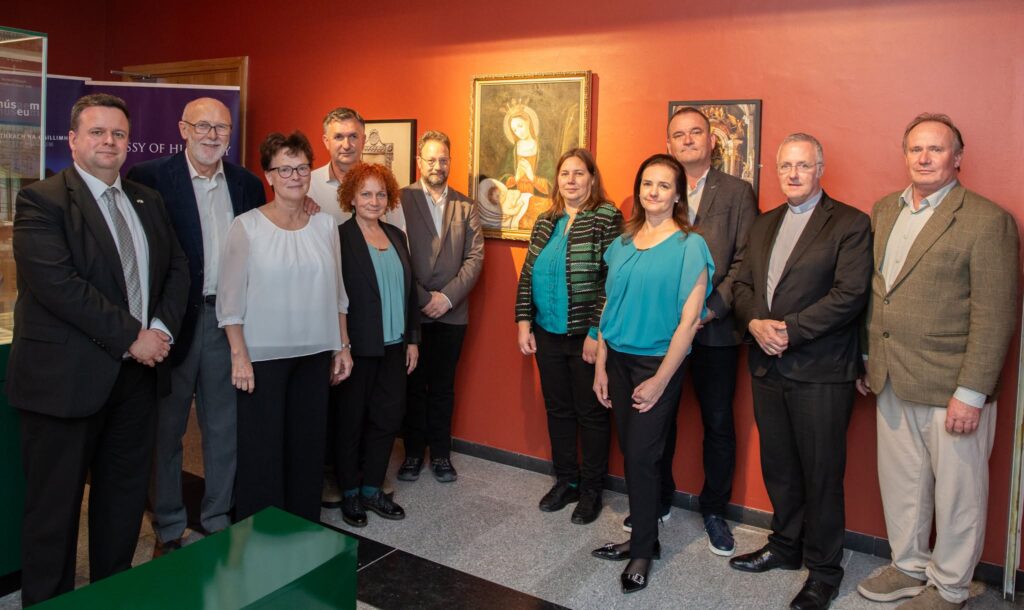
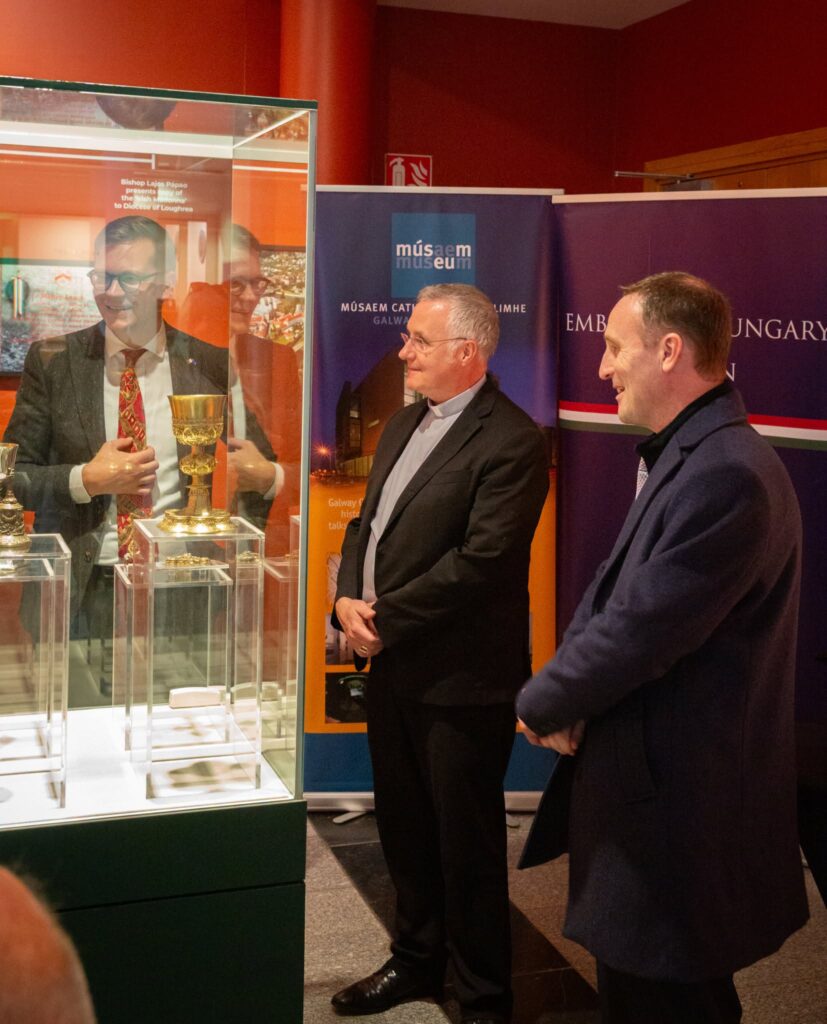
A dhaoine uaisle, a chairde go léir. Good evening! I am delighted to be with you this evening at Galway City Museum for the opening of this rather unique exhibition entitled: The Tribes in Hungary: Walter Lynch and Ferenc Martyn. We are honoured by the presence of our Deputy Maryor of Galway, Cllr. Josie Forde. We are also honoured to be joined by His Excellency Dr. Gergely Bánhegyi, the Hungarian Ambassador to Ireland and the Hungarian Embassy’s Cultural and Press Attaché Ms Enikő Szabó. I note that this year we are celebrating 50 years of formal diplomatic relations between Ireland and Hungary. I would like to take this opportunity to thank Dr Bánhegyi and the staff of the Hungarian Embassy for their enduring commitment to nurturing the centuries long friendships between Ireland and Hungary and in particular those friendships between Galway and Hungary so evident in this timely exhibition. Thank you also Dr Dr Bánhegyi for your presence last Sunday evening at our beautiful Cathedral of Our Lady Assumed into Heaven and St Nicholas for the dedication of our new shrine there to Bishop Walter Lynch’s famous “Weeping Virgin Mother of Győr” or Our Lady Consoler of the Afflicted.
I would like to take this opportunity to also acknowledge the presence of by Tamás Kiss head librarian and director of the Győr Diocesan Treasury and Library and the group that has travelled all the way from Hungary to be with us. Mr Kiss’s untiring dedication over decades to making known the story of Bishop Walter Lynch and his Miraculous Painting of the Madonna and Child has been noteworthy. Few have done as much to preserve this fascinating story and to build the modern-day links of friendship between Galway and Hungary that are evident in our gatherings here in Galway during these last few days. Finally, I would also like to acknowledge the presence of Msgr Cathal Geraghty Vicar General of the Diocese of Clonfert who has loaned the reproduction of the painting of Our Lady Consoler of the Afflicted to the exhibition.
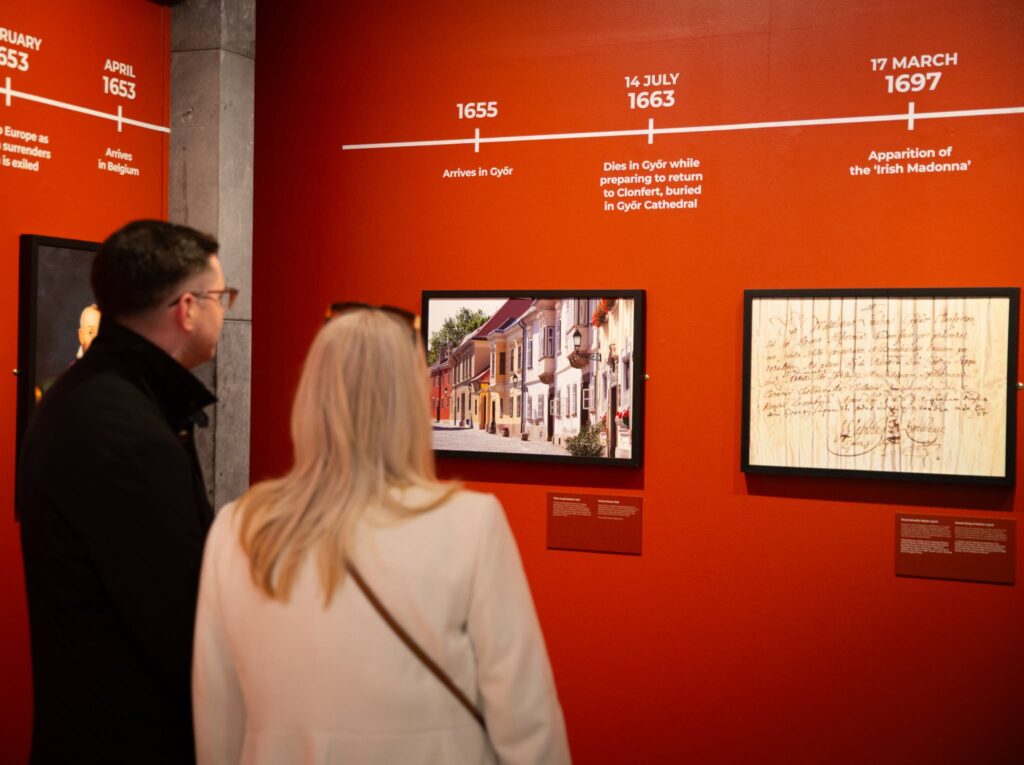
As both the Bishop of Galway, Kilmacduagh and Kilfenora and the Bishop of Clonfert, I feel a deep personal connection with Walter Lynch. Walter of the great Lynch clan so deeply rooted in this City was in a sense a direct seventeenth predecessor of mine as the Ecclesiastical Warden of Galway and Bishop of Clonfert. A short walk through the streets of modern-day Galway passing Lynch’s Castle, the Collegiate Church of St Nicholas and the City’s stone arches reminds us of the “Tribes” – those medieval merchant families who for centuries shaped the economic, civil and religious life of this place as an important port on the western flank of the most western island in Europe. We might be tempted to think of Galway back then as an isolated outpost on the Atlantic Ocean. However, thought the commercial activity of the tribes aided by the activity of the port, it was more connected to Europe and had a Europe focused mentality than we might imagine. Through the Tribes Galway’s footprint stretched far beyond our rugged shoreline to forge deep and lasting economic, cultural and spiritual roots even to the heart of central Europe. This exhibition rightly retrieves from the mists of history the lives of two extraordinary men rooted in this City’s unique heritage. A seventeenth century Catholic Bishop and a 20th Century Artist.
In the midst of the trauma and harsh persecution of Irish Catholics, Bishop Lynch fled these parts in fear of his life. A refugee on the continent, he was fortunate to have encountered in Vienna the human kindness and Christian Charity of Bishop János Püsky who gave him sanctuary in the Hungarian city of Győr. Some years after his death, Walter’s precious image of the Madonna and Child, displayed in at Győr became the centre of attention after it is reputed to have miraculously wept tears of blood just as some of the harshest of the penal law were enacted in Ireland. Today, that painting remains a focal point of intense devotion in Hungary, a beautiful testament to the harsh persecution endured by our forefathers and mothers and the radical, open-hearted empathy of the Hungarian people who welcomed a fleeing Irish bishop in his darkest hour.
Centuries after Bishop Lynch found refuge, that connection between Galway and Hungry blossomed anew through Ferenc Martyn. Born in Hungary, Ferenc was a direct descendant of the Martyn family of Galway whose ancestors had emigrated to Hungary in the 18th century. His innate artistic talent led him to become one of Hungary’s most celebrated abstract artists—a pioneer of the Abstraction-Création movement in Paris. Despite the generations that separated him from Galway, Martyn always spoke of a deep, genetic ‘memory’ of Ireland that flowed through his art. You can see it in his sweeping brushstrokes, his maritime themes, and his celebrated illustrations of James Joyce’s Ulysses. Throughout his life, he was extremely generous to his ancestral home and donated several of his finest Paris-period masterpieces back to Irish institutions.
The Tribes in Hungary exhibition we open tonight is much more than a historical display. It is a reminder that faith, culture, and humanity know no borders. It reminds us that the deep and important bonds of friendship, compassion, and artistic truth between Ireland and Hungary, between Galway and Hungary are ancient, resilient, and deeply alive today. My hope is that the continued recognising, celebrating and fostering such important connections can be a deeply enriching endeavour for all concerned.
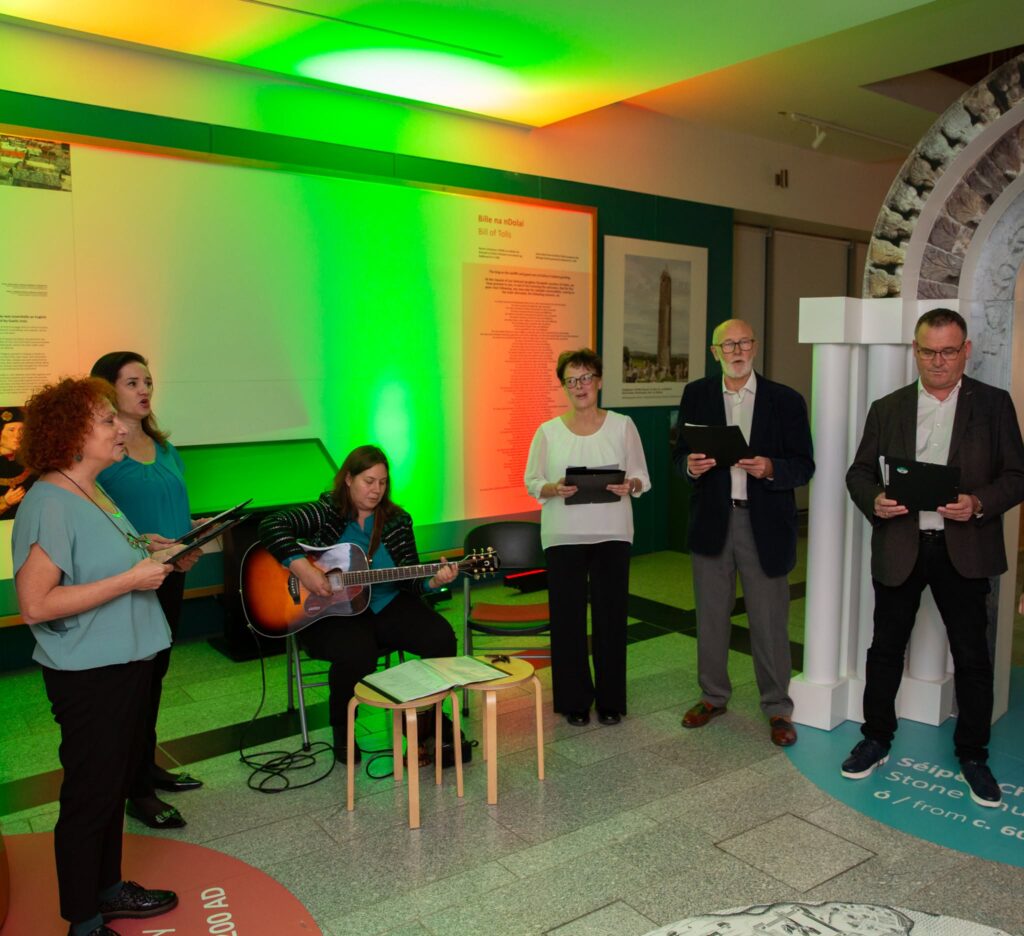
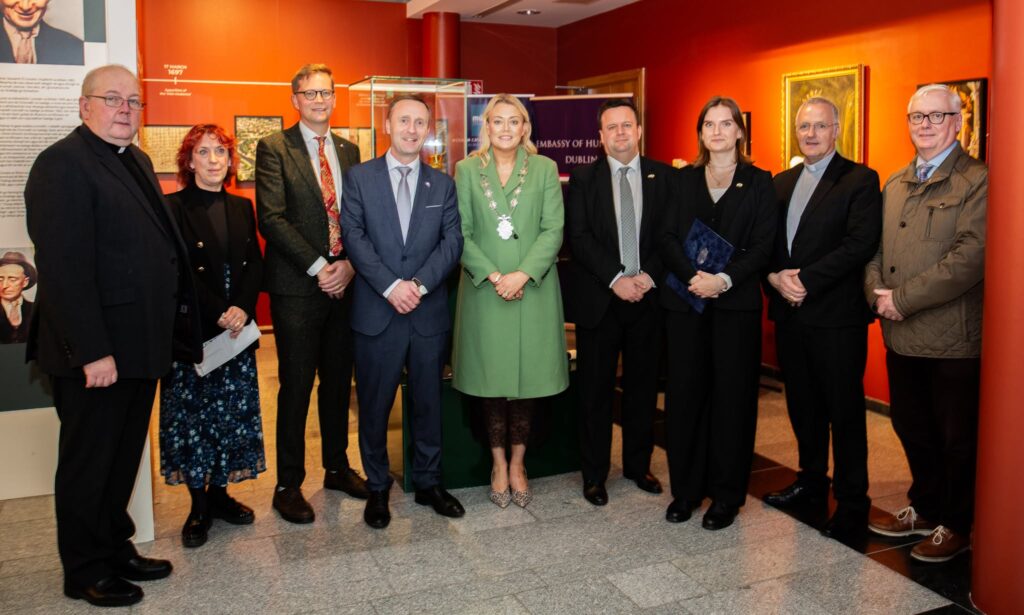
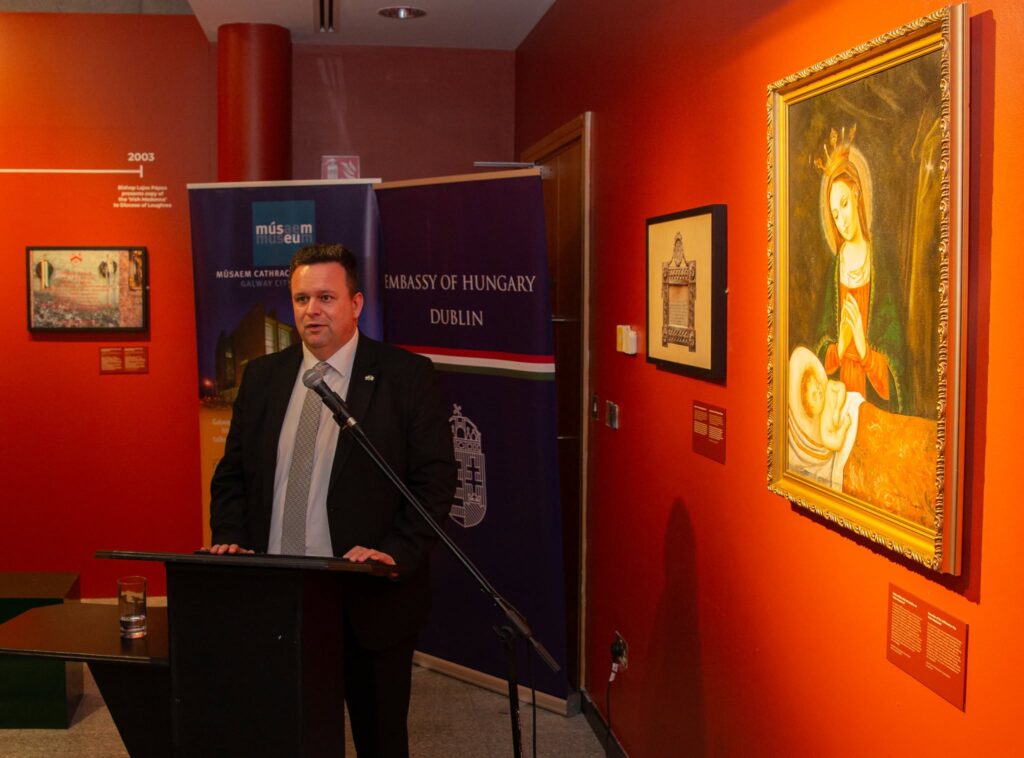
Finally, I would like to thank Adam Stoneman and the team here at Galway City Museum for making this important exhibition a possibility along with all those who have contributed to and supported its installation. I would also like to recognise the support of Galway City Council, along with Mr Leonard Cleary, Chief Executive of Galway City Council and Mr Keith Finnegan, International Relations Officer with Galway City Council. I would also like to welcome Fr Seamus Devitt here this evening, Fr Seamus has just published a short work on the life of Walter Lynch. Such work continues to support and nourish these important friendships that are the bedrock of this exhibition. Thank you! Köszönöm szépen! Go raibh míle maith agaibh go léir
Photographs Mr Sean Feeney